Law / Civil rights & activism
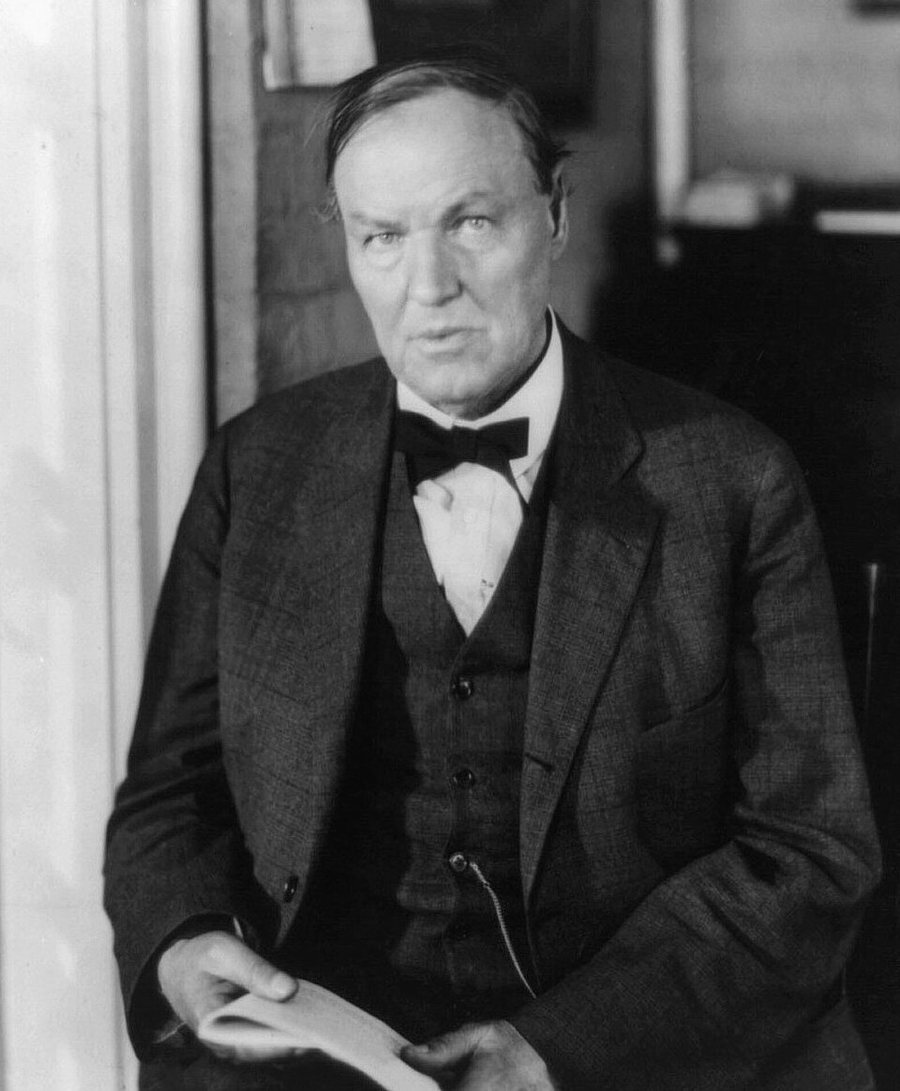
Clarence Darrow
1857–1938 · defense attorney
Famed Chicago defense lawyer who came to Detroit in 1925 to defend Dr. Ossian Sweet and ten others, winning a landmark civil rights case.
- Born
Farmdale, Ohio- Died
Chicago, Illinois
aged 80- Birth name
- Clarence Seward Darrow
- Detroit years
- 1925–1926
- Field
- Law, Civil rights & activism
01 / The Detroit story
The Detroit story
By 1925 Clarence Darrow was the most famous trial lawyer in America, fresh from the Scopes monkey trial in Tennessee. That fall the NAACP asked him to lead the defense of Dr. Ossian Sweet and ten Black co-defendants charged with murder after a white mob attacked Sweet's new house on Garland Street. Darrow, working with Arthur Garfield Hays and a team of Black Detroit lawyers, argued the case in Recorder's Court before Judge Frank Murphy, the future Michigan governor and Supreme Court justice. The first trial, in November 1925, ended with a deadlocked jury. In the spring of 1926 the prosecution tried Henry Sweet alone, and Darrow's closing argument, lasting around seven hours, put racial prejudice itself on trial; the all-white jury acquitted. Charges against the others were later dropped. The Detroit case became a milestone for the right of Black families to live and defend themselves where they chose, and Darrow's summation is still studied as a classic of American courtroom speech.
Highlights
- Led the NAACP-backed defense in the Sweet trials, 1925–1926
- Won the acquittal of Henry Sweet in May 1926 before Judge Frank Murphy
- His closing argument in Detroit is a celebrated civil rights speech
- Also known for the Scopes trial and the Leopold and Loeb case
02 / Their Detroit places
Their Detroit places 1
Where they lived, worked, performed and liked to hang out. Closed and demolished places stay here too, because they are part of the city's history.
Related place · 1925
Ossian H. Sweet House
The house at the center of the case Darrow defended; a Michigan State Historic Site and National Register property, privately owned.