Literature / Civil rights & activism / Science & invention
Charles Eastman
1858–1939 · physician, writer, reformer
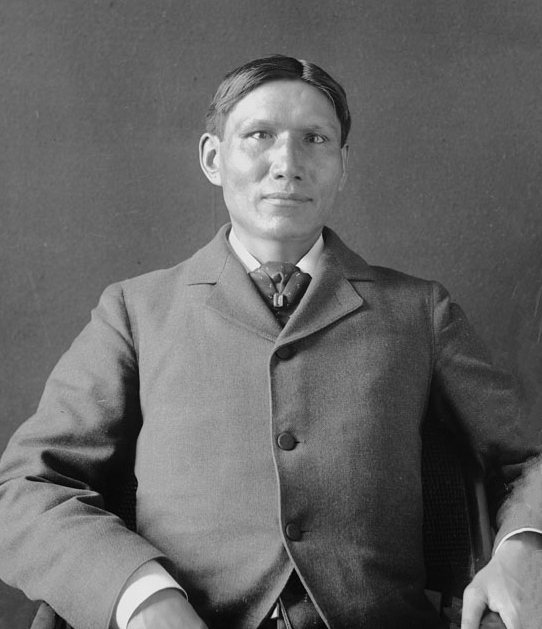
Santee Dakota physician and author, one of the best-known Native American writers of his time, who spent his last winters in Detroit, died here in 1939 and is buried in Evergreen Cemetery.
- Born
near Redwood Falls, Minnesota- Died
Detroit, Michigan
aged 80- Birth name
- Hakadah
- Also known as
- Ohiyesa · Charles Alexander Eastman
- Detroit years
- 1930s–1939
01 / The Detroit story
The Detroit story
Eastman was born in Minnesota in 1858 into a Santee Dakota family and was raised in the traditional way until he was fifteen, when his father brought him into the settler world. He graduated from Dartmouth College in 1887 and from Boston University's medical school in 1890, and as a government physician at Pine Ridge he cared for survivors of the Wounded Knee massacre. He went on to write books such as Indian Boyhood (1902), The Soul of the Indian (1911) and From the Deep Woods to Civilization (1916), lectured widely, founded dozens of Native YMCA chapters and helped launch the Boy Scouts of America. In his last years he spent the winters in Detroit with his son, Charles Jr., and he died of heart failure there in January 1939. He was buried in an unmarked grave in Detroit's Evergreen Cemetery; a marker was placed in 1984 by Dartmouth alumni and his biographer Raymond Wilson.
Highlights
- Indian Boyhood (1902) and From the Deep Woods to Civilization (1916)
- Physician at Pine Ridge at the time of the Wounded Knee massacre (1890)
- Founded 32 Native American chapters of the YMCA; helped found the Boy Scouts of America
- Died in Detroit, 1939; buried in Evergreen Cemetery on Woodward Avenue
02 / Their Detroit places
Their Detroit places 1
Where they lived, worked, performed and liked to hang out. Closed and demolished places stay here too, because they are part of the city's history.
Buried here · 1939
Evergreen Cemetery
Eastman lies in Section 9, Lot B; the grave was unmarked until Dartmouth alumni and biographer Raymond Wilson placed a marker in 1984.